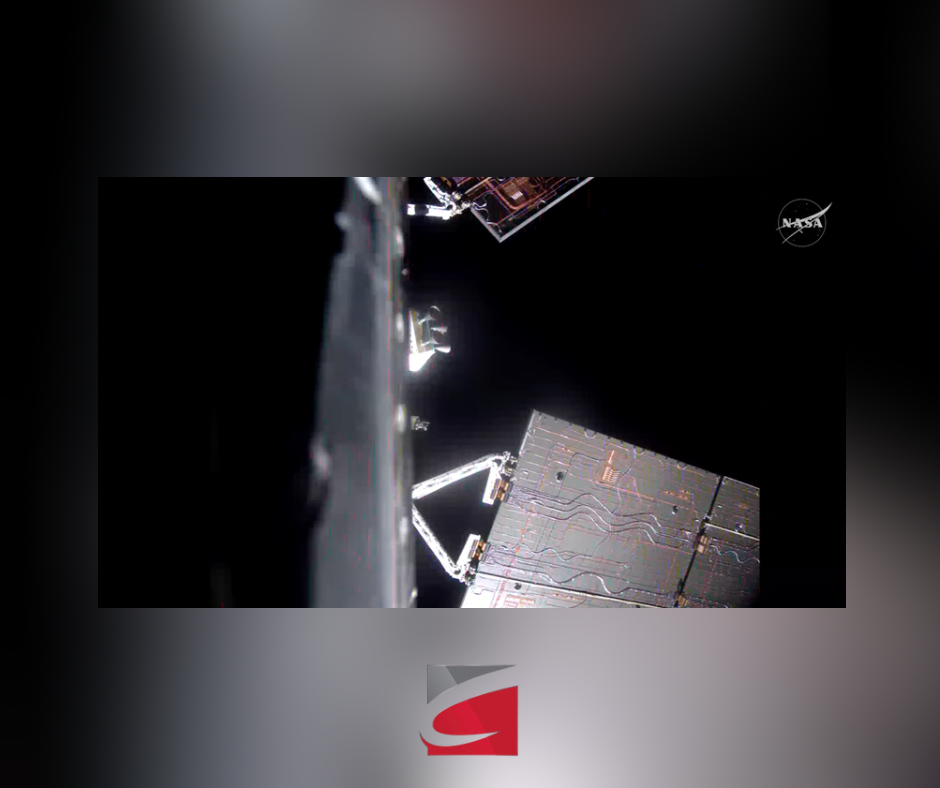
NASA is preparing for the Artemis II Moon flyby, marking a major step in returning humans to deep space.

Mission teams completed a correction burn at 11:03 p.m. EDT to refine Orion’s trajectory. The burn lasted 17.5 seconds and kept the spacecraft on course.
Meanwhile, the four astronauts continued onboard testing. Reid Wiseman, Victor Glover, Christina Koch, and Jeremy Hansen evaluated their Orion Crew Survival System suits.
They completed pressurization checks, mobility tests, and emergency simulations. These suits provide protection during critical flight phases and emergencies.
Next, Orion will enter the Moon’s sphere of influence at 12:41 a.m. Once that happens, lunar gravity will guide the spacecraft.
That transition sets up the Artemis II Moon flyby.
Key flyby events begin Monday afternoon, with live coverage starting at 1 p.m. across NASA platforms.
At 1:56 p.m., the crew is expected to pass the farthest distance from Earth ever reached by humans. Apollo 13 set that record in 1970.
Shortly after, the crew will provide remarks before preparing the cabin for flyby operations.
Lunar observations will begin at 2:45 p.m. as Orion approaches the Moon.
Later, at 6:44 p.m., communication will pause as the spacecraft moves behind the Moon. This blackout will last about 40 minutes.
Orion will reach its closest point at 7:02 p.m., passing about 4,070 miles above the surface.
Moments later, it will reach its maximum distance from Earth at 252,757 miles.
At 7:25 p.m., communication will return as Earth rises into view from behind the Moon.
The crew will also observe the Sun passing behind the Moon later that evening, creating an eclipse-like view from space.
Overall, Artemis II continues to test systems that will support future missions to the Moon and beyond.
Source: NASA Artemis II Mission Update
Revious Article: Artemis II Update: NASA Completes Proximity Operations, Prepares for Next Orbital Burn