Alexandria, La. (5/6/2026) — What began as a town hall about Louisiana’s congressional redistricting battle quickly exposed something much deeper inside the community: a growing disconnect between younger residents and the traditional political, civic, and media structures that once drove voter engagement.

Congressman Cleo Fields hosted the meeting at Mt. Zion Missionary Baptist Church following the U.S. Supreme Court’s decision striking down Louisiana’s congressional map in Louisiana v. Callais, a ruling that threatens the future of the state’s second majority-Black congressional district.
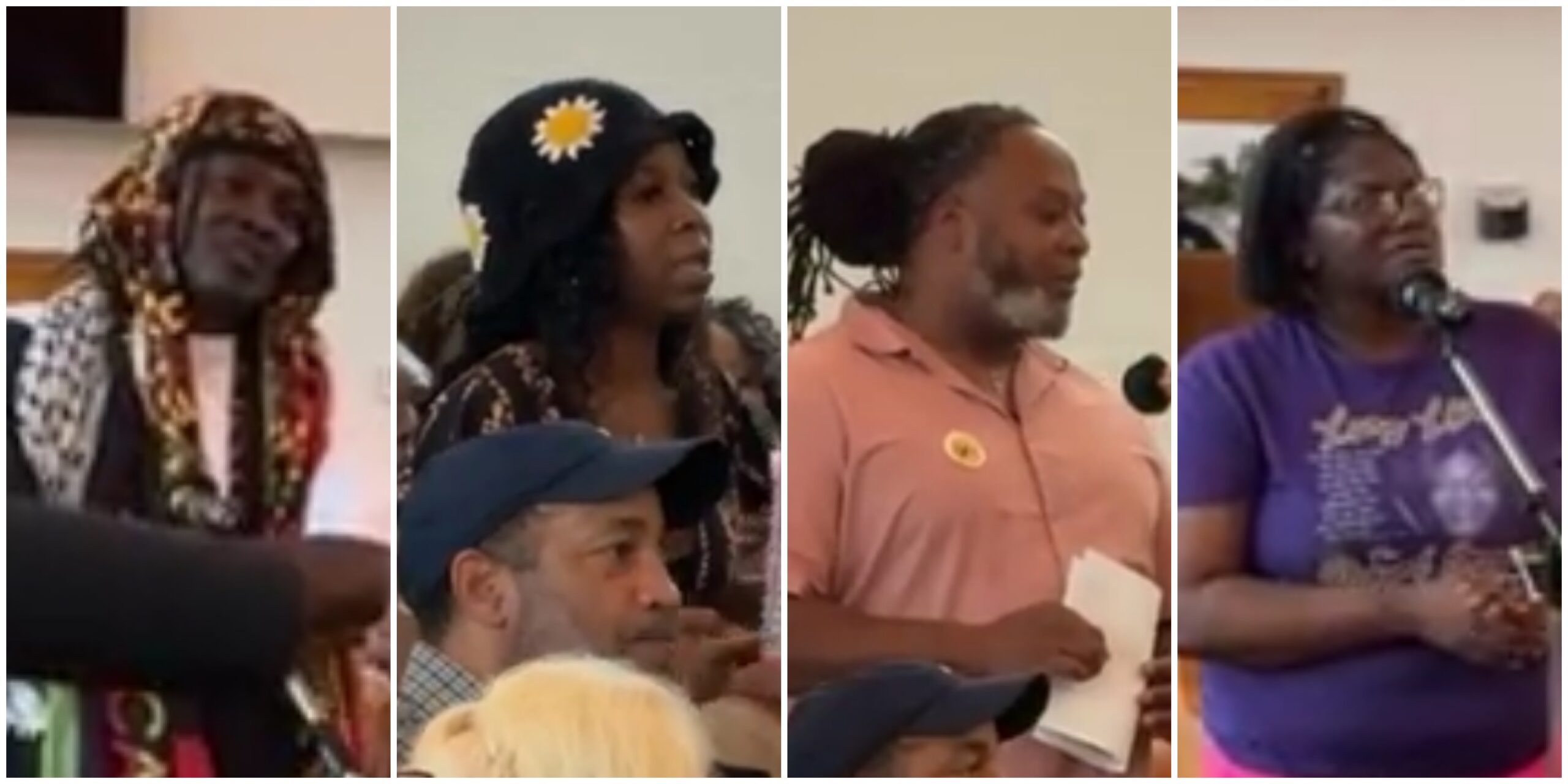
While Fields urged residents to stay engaged and continue fighting through voting and public participation, many younger attendees made it clear they believe the institutions historically responsible for educating, mobilizing, and politically organizing Black communities are no longer effectively reaching younger generations.
Several younger speakers openly challenged the effectiveness of traditional political outreach, election messaging, and community engagement efforts.
One attendee questioned why younger Black voters should continue trusting political systems that repeatedly ask for participation while producing little visible improvement in their communities.
“African-American communities showed out when it came time to vote,” the attendee said. “We voted. And we still got this mess.”
Comment Reflected Frustration
The comment reflected frustration not only with politicians, but with the broader political ecosystem surrounding elections — including organizations, messaging structures, and outreach efforts that younger residents increasingly view as disconnected from their daily realities.
Another younger attendee pushed the issue further, describing a cycle where politicians and community leaders appear during election periods but fail to maintain meaningful relationships with residents afterward.
“You have politicians who convince you to vote for them,” the attendee said. “And don’t do anything for us. Look us in our face, pray for us, cry, and then the next meeting they voted against the community.”
The attendee then directly questioned what younger people are realistically supposed to believe in when repeated participation has not produced the changes they expected.
The comments appeared to resonate throughout the room because they reflected frustrations many younger residents quietly express online and in community spaces: that traditional organizations and legacy political structures are often speaking to themselves rather than successfully connecting with broader audiences.
At multiple points during the meeting, speakers promoted outreach networks, sign-up systems, voter initiatives, and social media engagement efforts. Organizers encouraged residents to join contact lists and communication networks designed to notify the public about meetings, elections, and hearings.
“We have that,” one organizer said while referencing social media and digital communication tools. “There’s absolutely no reason why we shouldn’t be able to get the word out.”
Younger Attendees Repeatedly Signaled
But younger attendees repeatedly signaled that the issue may not simply be communication access. Instead, many suggested the deeper problem is that existing outreach structures are failing to inspire trust, participation, and sustained engagement beyond already politically active circles.
One younger attendee specifically raised concerns about voter education and political awareness among younger people, saying many walk into voting booths without understanding amendments, local races, or the direct impact of policies because the information either arrives too late or is not communicated in ways younger audiences consume information.
“The younger generation, the ones that don’t really follow, we don’t get that education firsthand,” the attendee said.
Another attendee challenged leaders to move beyond speeches and town halls by asking whether organizations and elected officials planned to actively engage younger people on the ground outside of election season.
“With all this going on, are y’all gonna put any programs out to convince more people to go out and vote?” the attendee asked. “Are y’all gonna be on the ground helping people?”
The questions highlighted concerns that many traditional organizations still rely heavily on old mobilization methods while younger audiences increasingly receive information through decentralized digital spaces, peer networks, and independent media platforms.
Throughout the night, attendees repeatedly referenced TikTok, social media influence, voter confusion, distrust in institutions, and the difficulty of motivating younger people who feel politically exhausted or disconnected.
One organizer acknowledged that battle directly.
“The other media is telling them not to vote,” the speaker said. “They’re telling them things on TikTok. But we have to be louder in our households.”
Fields did not dismiss the frustration. Instead, he acknowledged the emotional disconnect many residents expressed.
“I feel the pain. I really do,” Fields said. “But you just can’t give up on voting.”
He argued communities should hold politicians accountable through elections rather than abandoning the process altogether.
“When politicians don’t do right, you go and vote them out,” Fields said. “Don’t stop voting.”
No Longer Motivated Simply by History
Still, the exchanges made clear that many younger residents are no longer motivated simply by historical references to the Civil Rights Movement or symbolic appeals to voting rights. Several comments suggested younger audiences increasingly want visible accountability, direct community investment, transparency, and year-round engagement before fully buying back into traditional political participation.
Fields attempted to reconnect the current moment to the broader history of voting rights struggles in Louisiana, Reconstruction, segregation, and the Voting Rights Act of 1965.
“There are no apathetic voters,” Fields said, recalling advice he once received while traveling with Rev. Jesse Jackson. “There are only uninspired voters.”
The Supreme Court ruling itself remained central throughout the meeting. Fields warned the decision could eventually impact not only congressional districts, but school boards, city councils, judicial races, and legislative representation nationwide.
“This is not the end,” Fields said. “This is the beginning.”
But by the end of the evening, the most defining takeaway may not have been the legal battle itself. It was the unmistakable message from younger attendees that traditional political organizations, traditional media structures, and legacy civic engagement models are struggling to convince a new generation that meaningful value still exists for them inside the political process.
Previous Article: Congressman Cleo Fields to host Alexandria town hall on redistricting after election suspension