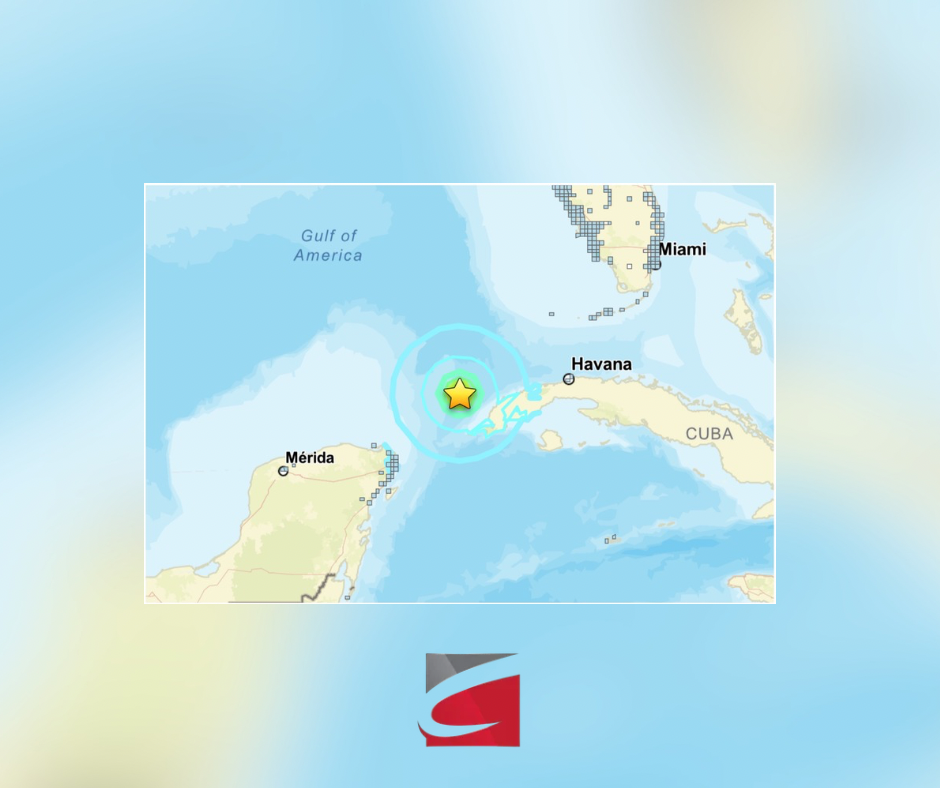
A Gulf of America earthquake measuring magnitude 6.1 struck Monday west of Cuba, according to the U.S. Geological Survey (USGS).

The earthquake occurred beneath the Gulf of America at a depth of approximately 26 kilometers (16 miles). The epicenter was located about 280 miles west of Cuba and several hundred miles south of the northern Gulf Coast.
The USGS reported that there is a low likelihood of damage from the event. No tsunami warnings were issued, and no significant impacts were expected for Louisiana or other Gulf Coast states.
According to the USGS, the earthquake resulted from reverse faulting within the North American tectonic plate. Unlike many earthquakes that occur along active plate boundaries, this event was classified as an intraplate earthquake, meaning it occurred within the interior of a tectonic plate.

The Gulf of America earthquake is considered unusual because seismic activity of this size is rare in the Gulf region. The USGS stated that this is the largest instrumentally recorded earthquake in the Gulf since 1950 and one of only six earthquakes measuring magnitude 5.0 or greater recorded there during that period.
Historical records indicate an earthquake estimated at magnitude 6.0 occurred near San Cristóbal, Cuba, in 1880. That event was reportedly felt in Florida and caused damage in parts of Cuba.

While significant damage is not anticipated from Monday’s earthquake, the USGS advises residents in the region to remain aware of possible aftershocks. Anyone who felt the shaking is encouraged to participate in the agency’s “Did You Feel It?” survey.
The event serves as a reminder that earthquakes, while uncommon, can occur beneath the Gulf and throughout the interior of the North American Plate.
Source: U.S. Geological Survey (USGS) Earthquake Hazards Program.
Previous Article: 3.9 Magnitude Earthquake Recorded in Gulf Waters South of Louisiana