Baton Rouge, La. (5/14/2026) – Louisiana lawmakers have advanced a Republican-backed map that would drop Louisiana to just one congressional district that favors Democrats.

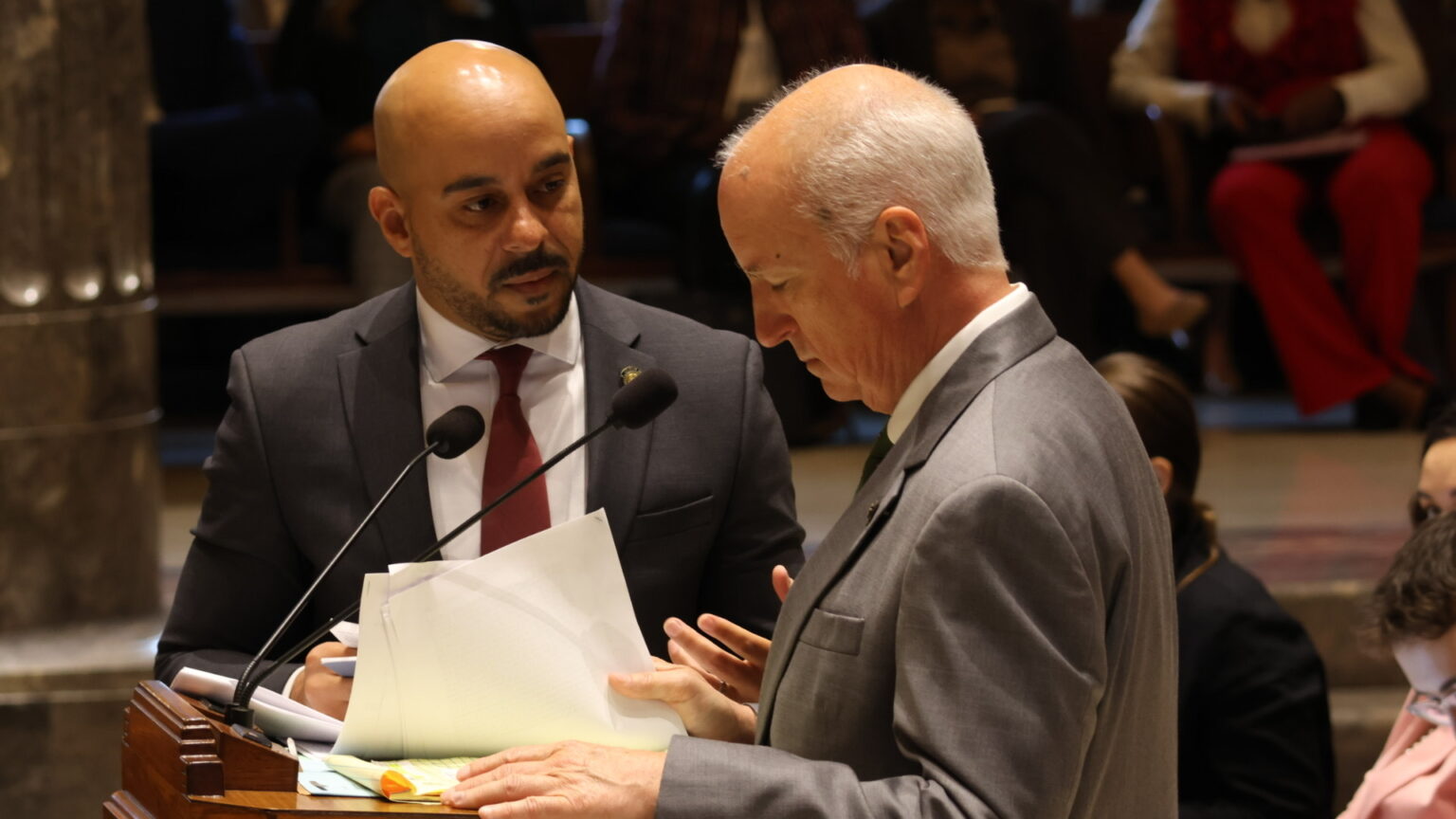
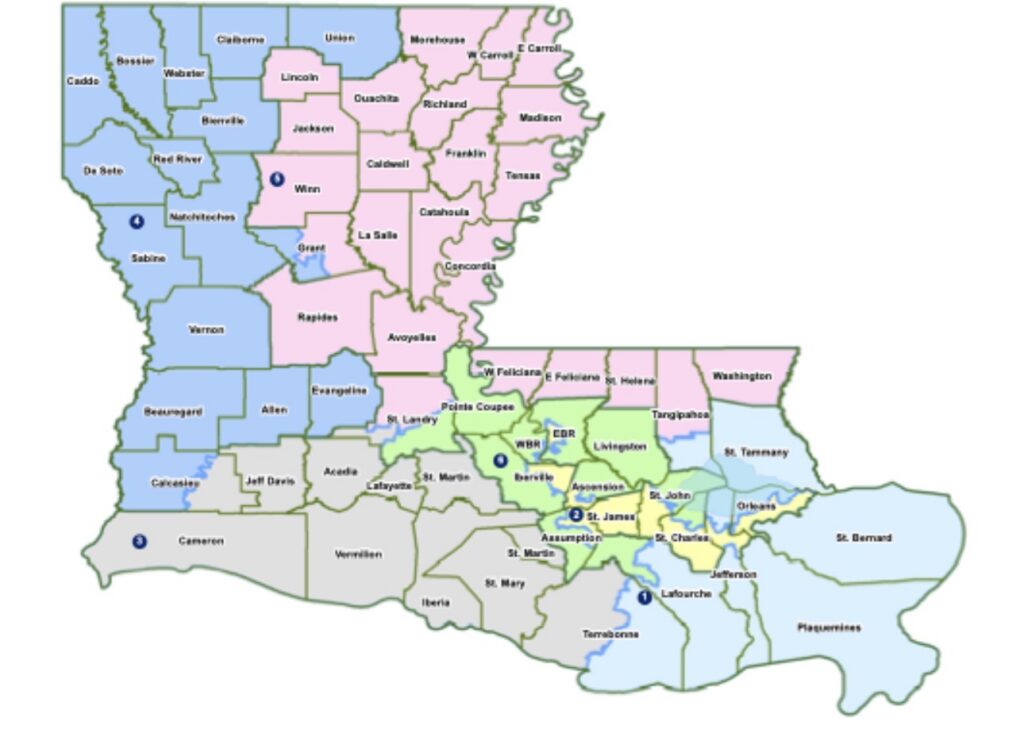
On a 27-10 party-line vote, the Louisiana Senate voted Thursday to advance Senate Bill 121 by Sen. Jay Morris, R-West Monroe, which keeps a single majority-Black district that stretches from Baton Rouge to New Orleans, giving Republicans another probable seat in their bid to maintain control of Congress.
Morris’ bill was heavily criticized by Democrats, who alleged it was a racial gerrymander in service of President Donald Trump.
“We are setting our state and our country back more than six decades,” Sen. Royce Duplessis, D-New Orleans, said. “And by doing that, I guess in some people’s view of the world, we are Making America Great Again.”
The bill’s approval of the map comes just a day after a senate committee held a nearly 10-hour overnight hearing before its initial approval. Hundreds of voting rights activists filled the Capitol to speak against Morris’ bill in the fiery hearing.
The new district in Morris’ proposal is essentially the same as the one U.S. Rep. Troy Carter, D-New Orleans, won in the 2022 election. Morris said the district was designed to protect Carter’s incumbency, though its inclusion of Baton Rouge means it would pit Carter against current 6th District Congressman Cleo Fields, D-Baton Rouge. The net result would put Republicans in five of Louisiana’s six U.S. House seats.
Disregard Race and Instead Focus on Party
Morris said his goal in drawing the map was to disregard race and instead focus on party. While racial gerrymandering remains illegal, partisan redistricting is legal. Morris said his map is designed to “maximize Republican advantage for the incumbent Republicans that we have in Congress.”
Senate President Cameron Henry, R-Metairie, said beyond the partisan goals, leadership wants an end to the litigation, which has effectively been ongoing since 2022.
“The goal is to stop being sued,” Henry said.
The latest step to overhaul the state’s congressional makeup comes two weeks after the U.S. Supreme Court declared Louisiana’s existing U.S. House districts an unconstitutional racial gerrymander. The 6-3 decision from conservative justices in the case Louisiana v. Callais has prompted Republican leaders in Southern states to adjust their congressional maps as well.
The day after the Callais ruling, Republican Gov. Jeff Landry suspended the U.S. House party primaries, which take place Saturday, to give lawmakers enough time to adopt new maps for the 2026 midterm elections.
On Tuesday, lawmakers quickly passed House Bill 842 by Rep. Beau Beaullieu, R-New Iberia, which was amended to include a provision to reschedule the primaries. Instead of holding semi-closed party primaries as originally planned, Louisiana will instead revert to a jungle primary, in which candidates of all parties appear on the same ballot.
Beaullieu’s bill also voids any ballots already cast in the U.S. House primaries. More than 42,000 people voted absentee before Landry suspended the election. Secretary of State Nancy Landry was unable to remove House races from the ballots, so tens of thousands of others were able to vote in those races since then during the early voting period.
Voided Ballots
The bill also contains a provision that would hide the number of voided ballots cast in the House races on the May 16 election from public disclosure. The additions were added into Beaullieu’s legislation in a closed-door meeting and adopted by both chambers over the course of an hour without an opportunity for public comment.
The new primary elections will be held on Nov. 3 with runoffs set for Dec. 12 if needed. The bill also set a new candidate qualifying period the first week of August.
Party vs. race
The latest versions of Morris’ bill were presented without the usual voter demographic data that accompanies redistricting bills, instead only providing party affiliation.
Democrats opposed to his proposal allege it is a racial gerrymander.
“If 80% of the Republican party is white … this bill does use race as a predominant factor,” Sen. Sidney Barthelemy, D-New Orleans, said.
Morris acknowledged his goal was to pack as many Democrats in Carter’s 2nd Congressional District so that Republicans in the other districts would have an advantage.
“When you create Republican districts, you care more about people who are in Washington, worry more about the national party than they do us,” Sen. Katrina Jackson Andrews, D-Monroe, said.
Packing is a form of gerrymandering meant to dilute the voting power of certain voters by forcing them into a single district. It has historically been a method used to disadvantage Black voters.
“It’s gerrymandering,” Sen. Sam Jenkins, D-Shreveport, said. “What you can’t do is you cannot discriminate against people to get that partisan outcome. You cannot do racial gerrymandering to get that partisan outcome.”
Rejected Senate Bill 407
A Senate committee earlier this week rejected Senate Bill 407 by Sen. Ed Price, D-Gonzales, which created two districts competitive for Democrats, though neither were majority Black. Price said that since the Callais decision limited the extent lawmakers could take race into consideration, he primarily used party demographics.
Price again proposed this version of the map as an amendment to Morris’ bill, but it was rejected on a 27-10 vote.
“This is a bill that represents Louisiana, not Donald Trump,” Duplessis said of Price’s amendment.
This is a developing story.
Source: Louisiana Illuminator By: PIPER HUTCHINSON