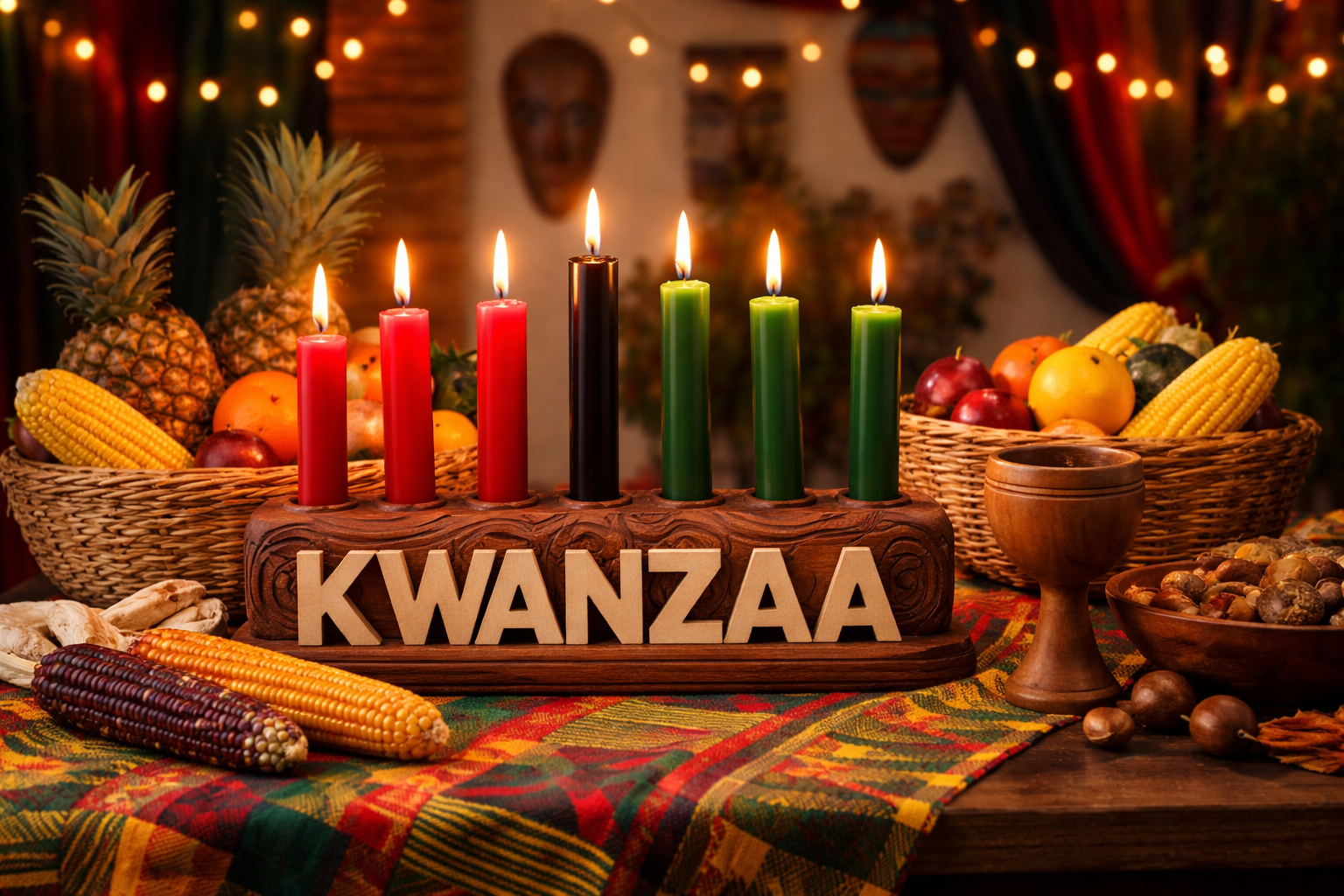
ALEXANDRIA, LA (12/26/2025) — Today marks the first day of Kwanzaa, a week-long cultural celebration rooted in unity, purpose, and collective responsibility. As the first candle, the black candle of Umoja (Unity), is lit, it arrives at a moment of truth for Alexandria. Kwanzaa does not exist in isolation. It speaks directly to the conditions many neighborhoods continue to face and to the choices that shaped them.
Kwanzaa is not simply about tradition. It is about accountability.

How Division Shaped the City
Alexandria’s economic imbalance did not happen by chance. Over time, growth concentrated in select areas while many neighborhoods were left behind. Instead of shared investment, division became a governing tool.
Leaders learned that a divided population struggles to demand results. Race, income, district lines, and personal loyalties became wedges. Neighbors were encouraged to compete rather than collaborate. Small incentives replaced meaningful investment, and short-term favors took the place of long-term solutions.
Ego-driven leadership flourished under these conditions. Personal power mattered more than community progress. As a result, stagnation normalized and expectations declined.
The Roots of Kwanzaa and Why They Matter Here
Dr. Maulana Karenga created Kwanzaa in 1966 during the Black Freedom Movement. He designed it to address cultural disconnection and systemic neglect. While rooted in African heritage, its principles apply wherever communities experience exclusion.
Kwanzaa is not religious. It is cultural and practical. Its seven principles, known as the Nguzo Saba, provide a framework for unity, accountability, and resilience.
In Alexandria, that framework directly challenges the current reality.
Umoja as a Direct Challenge to Division
Umoja, the first principle of Kwanzaa, calls for unity within families, neighborhoods, and the nation. In today’s Alexandria, Umoja stands in direct opposition to divide-and-conquer tactics.
When the affluent pit neighbor against neighbor, unity becomes resistance. Safe streets, affordable food, reliable utilities, and economic opportunity remain shared needs across all lines. Umoja reminds residents that their interests are aligned, even when power structures suggest otherwise.
Beyond the Candles: The Condition of the Neighborhoods
Unity requires honesty about present conditions.
Commerce and Food Access
Districts 1 and 3 function as food deserts, with District 3 experiencing a deeper collapse in commerce. Many neighborhoods lack basic retail, banking, and professional services. This withdrawal of essential commerce directly impacts dignity, opportunity, and long-term neighborhood viability.
Infrastructure
True infrastructure extends beyond street projects. It includes access to safe drinking water and affordable electricity. While industrial development advances, residents in marginalized neighborhoods face aging pipes and utility rates that continue to rise.
Public Safety
The cost of stagnation is also measured in safety. Recent shooting injuries involving a 9-year-old and an 11-year-old, multiple homicides, and ongoing violent crime have shaken neighborhoods. Many residents report a lack of sustained communication and visible accountability following these incidents.
Unity means refusing to normalize violence. Every child must matter.
From Marginalized to Organized
Kwanzaa’s principles are not symbolic. They are instructional.
Kujichagulia, or self-determination, demands that neighborhoods define their own priorities rather than accept neglect. Ujima, or collective work and responsibility, calls for shared action and measurable outcomes. Imani, or faith, reinforces belief in collective power after years of being told change is unrealistic.
Together, these principles challenge the systems that benefit from division.
Unity Requires Action
Kwanzaa does not end with reflection. It requires participation.
In Alexandria, real power rests with registered voters who hold leaders accountable for outcomes, not rhetoric. Civic engagement remains one of the strongest tools available to marginalized neighborhoods.
Residents are encouraged to take action:
- Check voter registration status
- Register to vote if unregistered
- Track votes on budgets, district maps, tax renewals, and utility rates
How to Register: Visit geauxvote.com to register online, verify your status, or access mail-in applications.
Kwanzaa reminds us that we are the first fruits of our own labor. This week is about more than lighting candles. It is about reclaiming unity, demanding accountability, and rewriting the story of Alexandria’s neighborhoods.
Previous Article: Exploring the History of Kwanzaa: A Celebration of African Culture and Heritage